
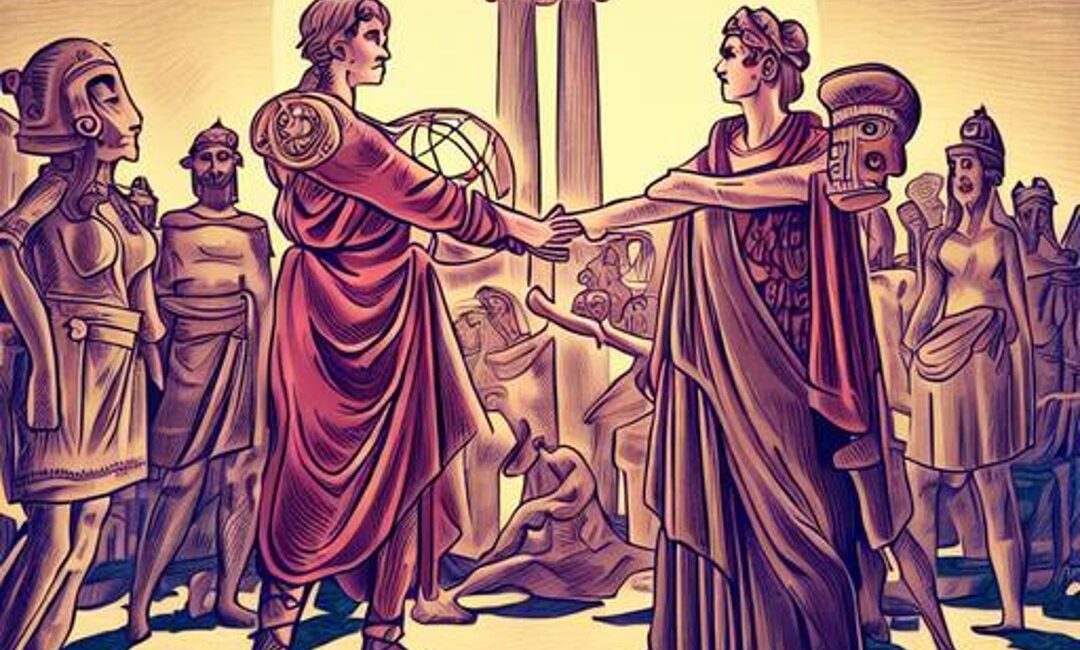
Politics, as a pursuit of power and governance, is not a phenomenon unique to modern times. Throughout history, civilizations have grappled with the intricacies of political systems and the art of ruling. In this article, we delve into the political landscapes of ancient times, exploring the fascinating world of governance in civilizations such as Ancient Greece, Rome, and Ancient India.
- Ancient Greece: The Birthplace of Democracy In ancient Greece, particularly in Athens, the concept of democracy emerged. The city-state of Athens is renowned for its direct democracy, where citizens gathered in the assembly to debate and vote on matters of governance. Prominent figures like Solon and Pericles shaped Athenian politics, enabling citizen participation and establishing a foundation for democratic principles that would resonate throughout history.
- Rome: The Republic and the Empire The ancient Roman Republic showcased a unique political system that evolved over time. Initially, Rome had a republican form of government, where elected officials represented the interests of the citizens. However, as Rome expanded, it transitioned into an imperial system with emperors holding supreme power. This shift marked a significant transformation in political dynamics, with the rise of emperors like Augustus and the establishment of a centralized authority.
- Ancient India: Kings and Kingdoms In ancient India, political governance was primarily shaped by the concept of kingship. Various dynasties ruled different regions, with kings serving as the central figures of authority. The Maurya Empire, led by Emperor Ashoka, is notable for its governance policies and emphasis on principles of justice and welfare. Additionally, ancient texts like the Arthashastra by Kautilya (Chanakya) provide insights into the intricacies of statecraft and political administration during this era.
- Power Struggles and Diplomacy In ancient politics, power struggles and diplomacy played vital roles. Rivalries between city-states, dynastic conflicts, and territorial disputes were commonplace. Ancient Greek city-states often engaged in political alliances and warfare, while Rome faced internal strife and external conflicts, leading to the eventual decline of the republic. Diplomatic negotiations, treaties, and strategic alliances were employed to maintain balance and protect the interests of these ancient civilizations.
- Philosophy and Political Thought Ancient times witnessed the birth of profound political philosophies that continue to influence modern thinking. Thinkers like Plato, Aristotle, and Confucius contemplated the nature of governance, justice, and the ideal state. Their works, such as Plato’s “The Republic” and Aristotle’s “Politics,” explored concepts like meritocracy, the rule of law, and the balance of power, shaping political discourse for centuries to come.
The political landscapes of ancient times were as diverse as they were intriguing. From the birth of democracy in Greece to the imperial rule in Rome and the dynamics of kingship in ancient India, these civilizations laid the groundwork for political systems that would shape human history. Exploring their complexities not only provides insight into the past but also highlights the endurance of political ideas and their relevance in contemporary society. By understanding our political roots, we can gain a deeper appreciation for the evolution of governance and the challenges faced by our ancestors in their pursuit of power and order.