
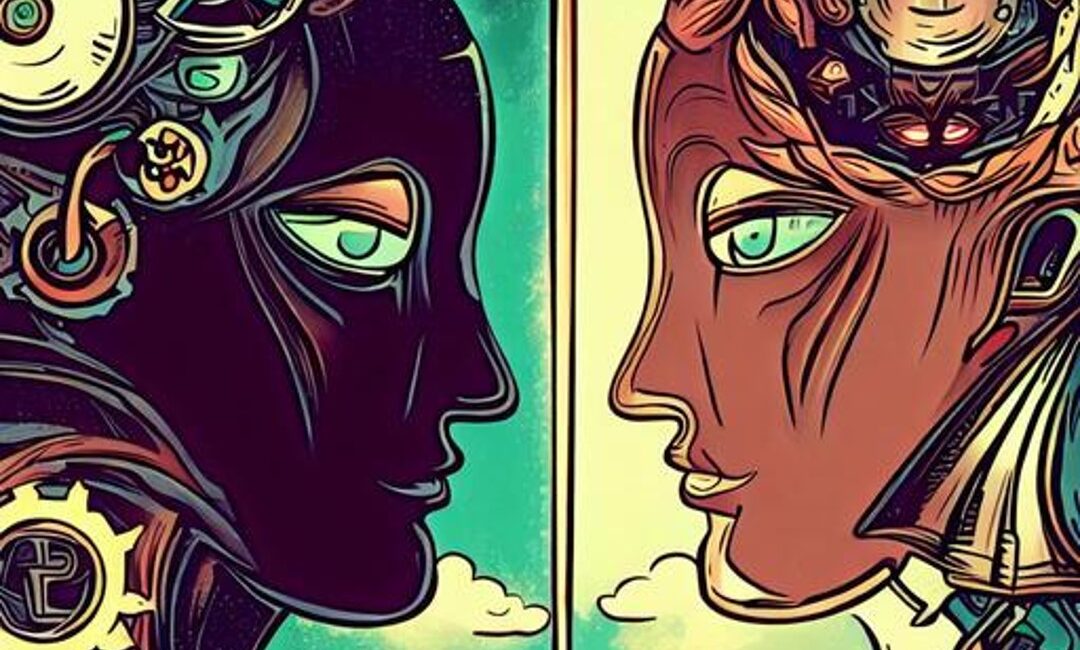
The nature of consciousness and its relationship to the physical world has long been a subject of philosophical inquiry. In the realm of philosophy of mind, two prominent perspectives have emerged: dualism and materialism. In this blog post, we delve into the complexities of these positions, exploring the contrasting views they offer on the nature of consciousness and the mind-body relationship.
- Dualism: The Duality of Mind and Matter Dualism posits that consciousness and the physical world are separate entities. It suggests that the mind or consciousness is non-physical and distinct from the physical body. René Descartes, a notable dualist, argued for the existence of an immaterial mind that interacts with the material body. Dualism raises profound questions about the nature of the mind, its relationship to the body, and the potential for an afterlife or immortality of the mind.
- Substance Dualism: The Mind-Body Duality Substance dualism, an extension of dualism, asserts that the mind and body are two fundamentally different substances. According to this view, the mind is a non-physical substance with subjective experiences, thoughts, and consciousness, while the body is a physical substance subject to the laws of nature. Substance dualism proposes that the mind and body interact but remain distinct entities.
- Materialism: Mind as Product of the Physical World Materialism, also known as physicalism, presents a contrasting perspective. It argues that everything, including the mind and consciousness, can be explained by physical entities and their interactions. Materialists assert that the mind is a product of physical processes occurring in the brain, with consciousness emerging from complex neuronal activity. Materialism emphasizes that the mind is ultimately reducible to physical phenomena.
- Identity Theory: Mind as Identical to Brain Activity Identity theory is a version of materialism that suggests the mind and brain are identical. It posits that mental states are identical to specific brain states, meaning that there is a one-to-one correlation between mental events and neural activity. Identity theorists argue that mental experiences and conscious states are inseparable from physical brain processes.
- Functionalism: Mind as a System of Functional Processes Functionalism is another materialistic approach that focuses on the functions and processes of the mind rather than its physical substrate. It suggests that mental states are defined by their functional roles or relationships with other mental states, regardless of the specific physical medium. Functionalists argue that consciousness arises from the complex organization and information processing of the brain.
- Challenges and Debates: The debate between dualism and materialism is rich with ongoing discussions and challenges. Dualism faces criticisms related to the problem of interaction, explaining how an immaterial mind interacts with a physical body. Materialism, on the other hand, encounters difficulties in providing a complete account of subjective experiences and the qualia of consciousness. These challenges spur further philosophical inquiry and scientific research into the nature of consciousness.
The philosophy of mind encompasses profound questions about the nature of consciousness and its relationship to the physical world. Dualism and materialism offer contrasting perspectives on this complex issue. Dualism posits the existence of a non-physical mind, separate from the body, while materialism argues that the mind is a product of physical processes. The debate between these positions continues to stimulate intellectual exploration and scientific investigation, as we strive to unravel the mysteries surrounding the nature of consciousness and its intricate connection to the physical realm.